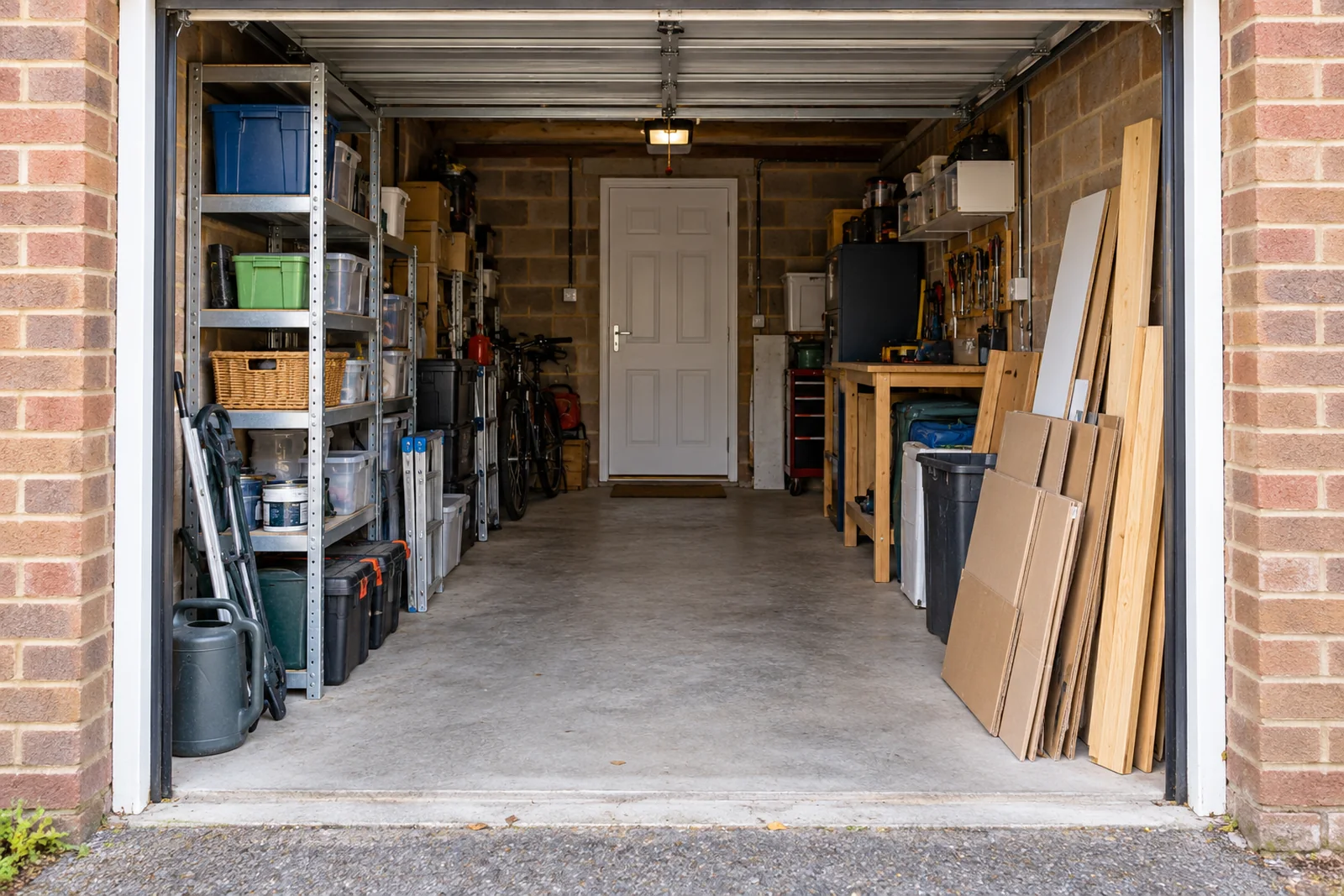
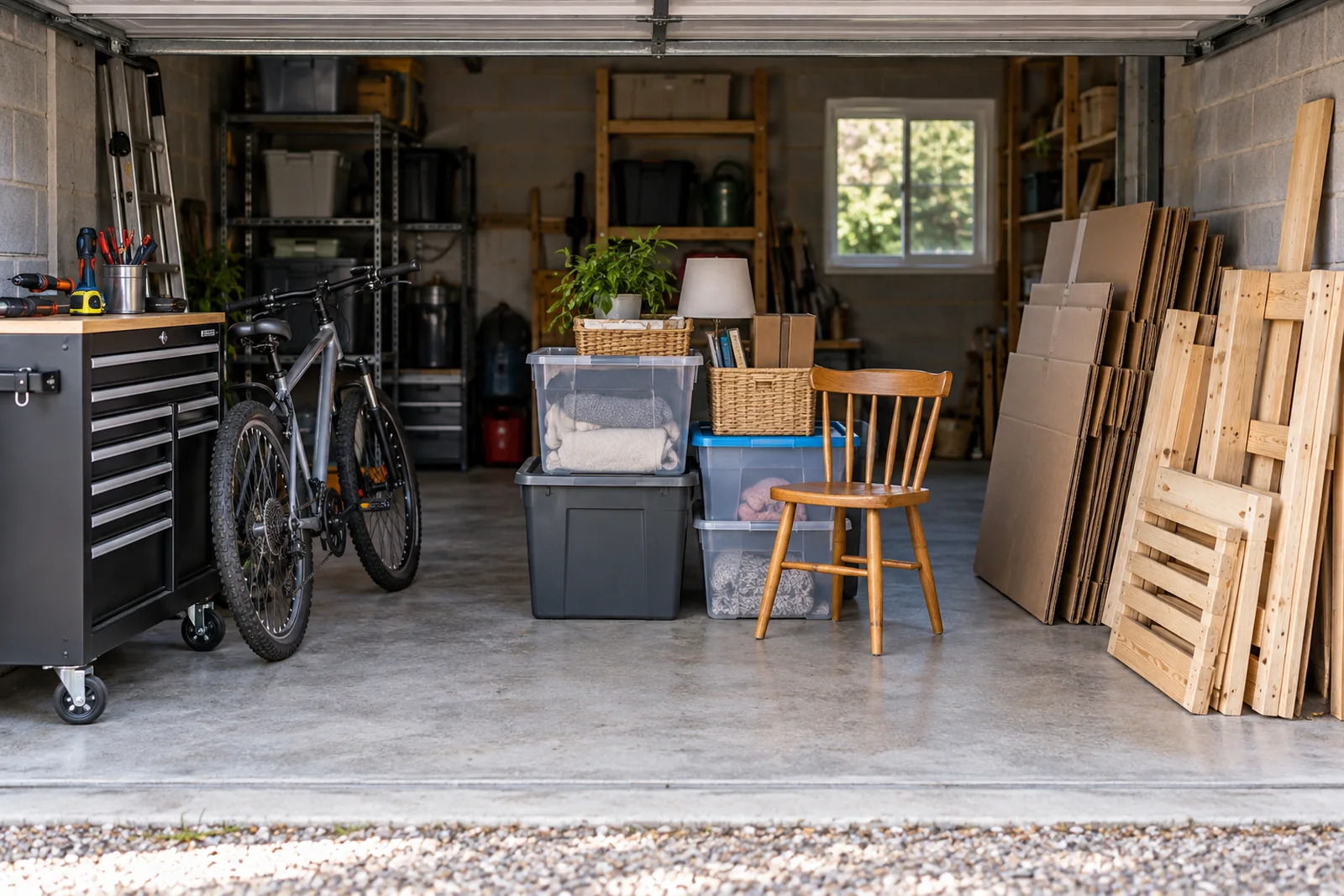
Sort what is staying, what can be reused and what needs taking away before choosing a skip or collection.
Make three groups before you book
Give yourself three clearly separate places: things to keep, things that might be reused and things that need to leave as waste. Mark the groups so another person helping with the clearout does not make a different decision. Keep keys, paperwork and small valuable items somewhere indoors rather than in an open sorting box.

Work through one shelf or corner at a time. A box marked “old kitchen” might hold useful fittings as well as broken packaging, so look through ordinary stored belongings before adding the whole box to the rubbish pile. Leave unfamiliar containers and anything that looks damaged or unstable alone until you know what it is.
Offer usable belongings for reuse early. A family member, buyer or reuse organisation may need measurements and a clear description of the condition before agreeing to take them. Confirm a handover rather than assuming every unwanted item can be donated. Once the agreed items have gone, the remaining waste is easier to judge. Zero Waste Scotland's reuse guidance is a useful starting point for passing on things that still work.
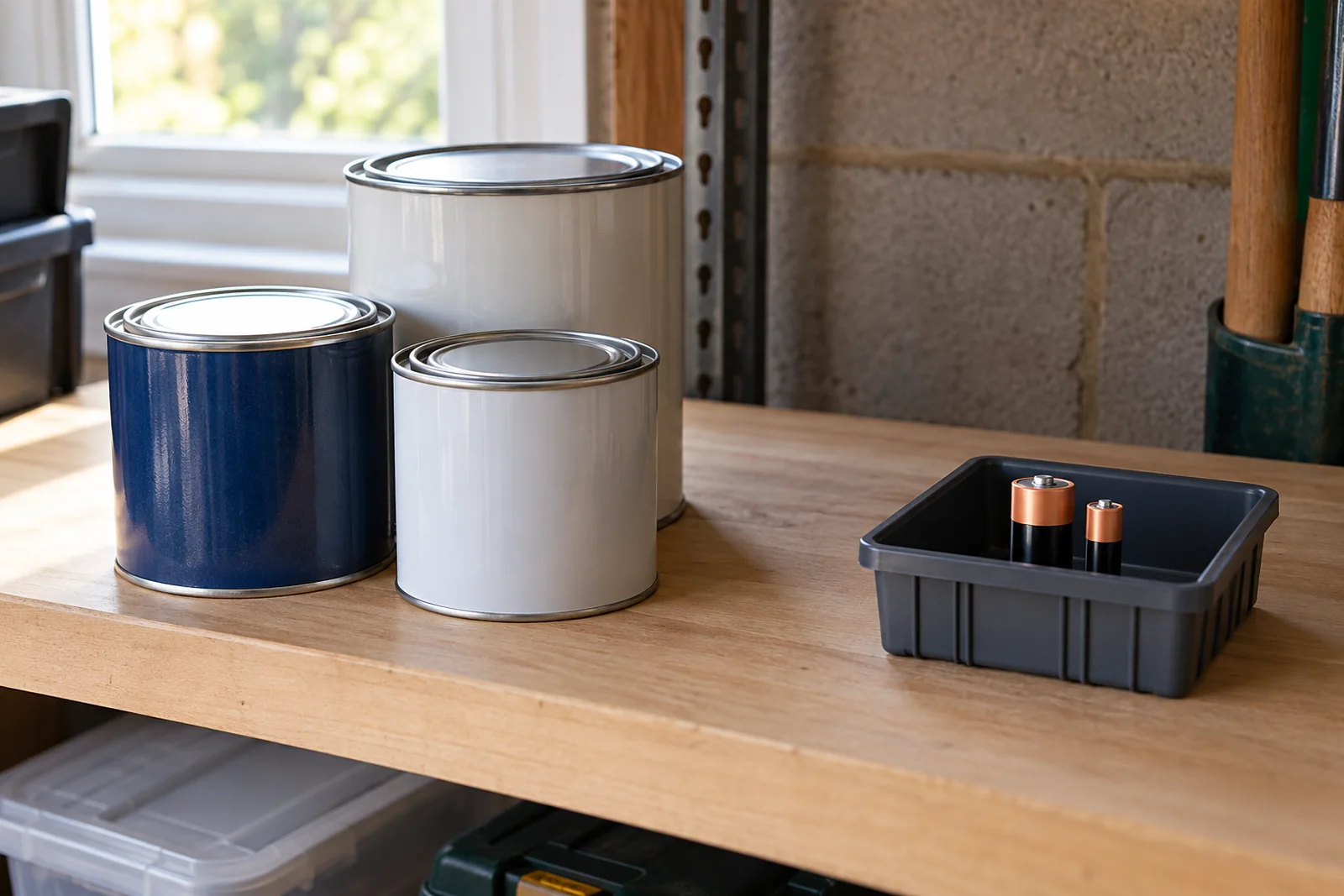
Keep batteries, electricals and unknown tins apart
Garages often contain more than boxes and timber. Look out for battery-powered tools, chargers, old electrical equipment, paint tins, garden chemicals and parts left over from earlier building work. These need describing separately. Do not add them to ordinary mixed waste because a small quantity seems harmless or because they are hidden inside another item.
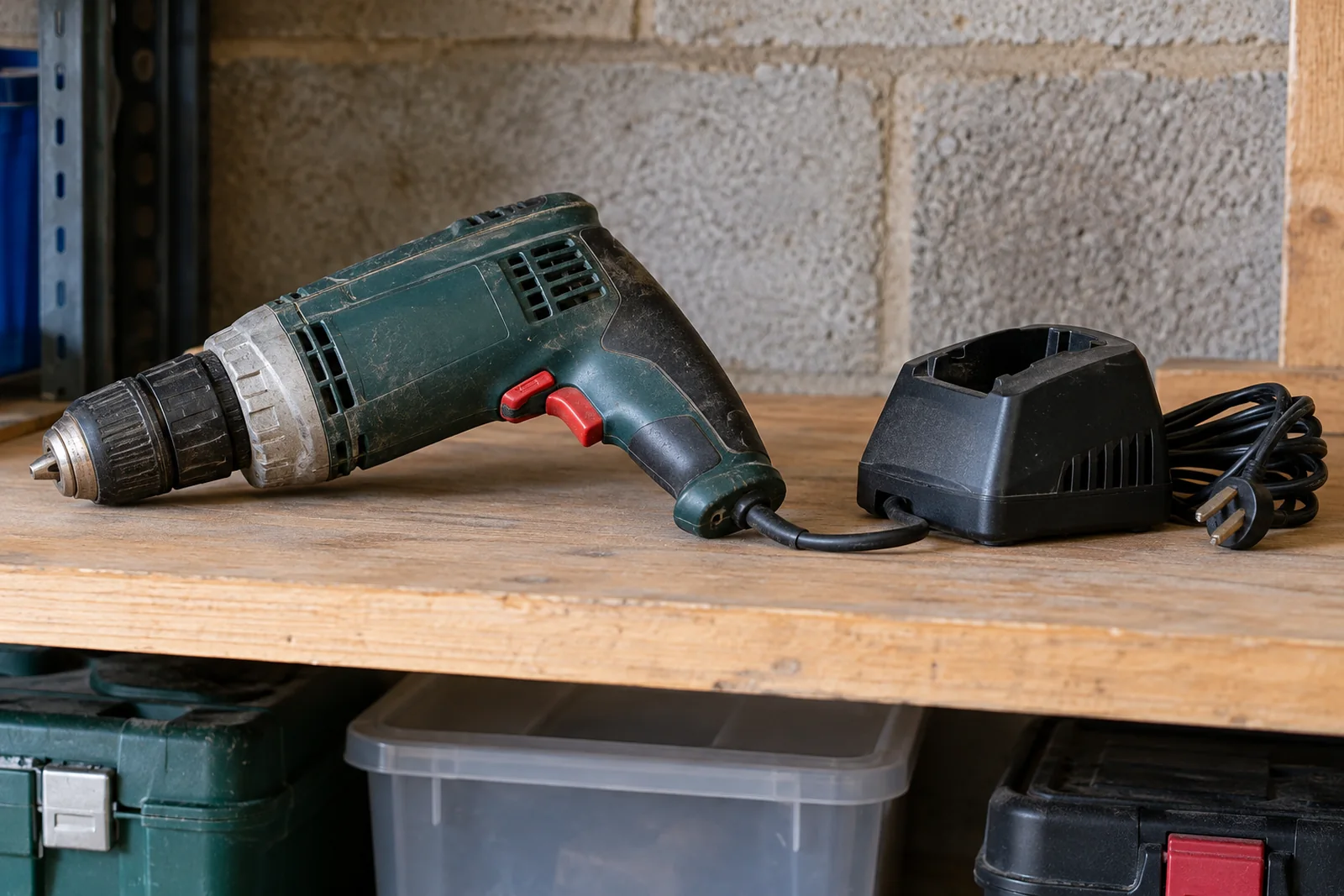
Batteries and electrical items have their own collection and recycling routes. Keep them out of the general rubbish pile and follow current official advice for the particular item. Do not dismantle a damaged battery or unfamiliar electrical device to try to make it acceptable. If something is leaking, damaged or unidentified, keep people away and seek suitable advice before moving it.
The same caution applies to unknown sheets or building materials. Their appearance alone cannot tell you whether they are safe to handle. Stop disturbing them and get advice. For an ordinary household recycling-centre trip, check the council's accepted-item and vehicle rules first. A household site is not a disposal route for a contractor's trade waste.
Measure the waste that really needs to leave
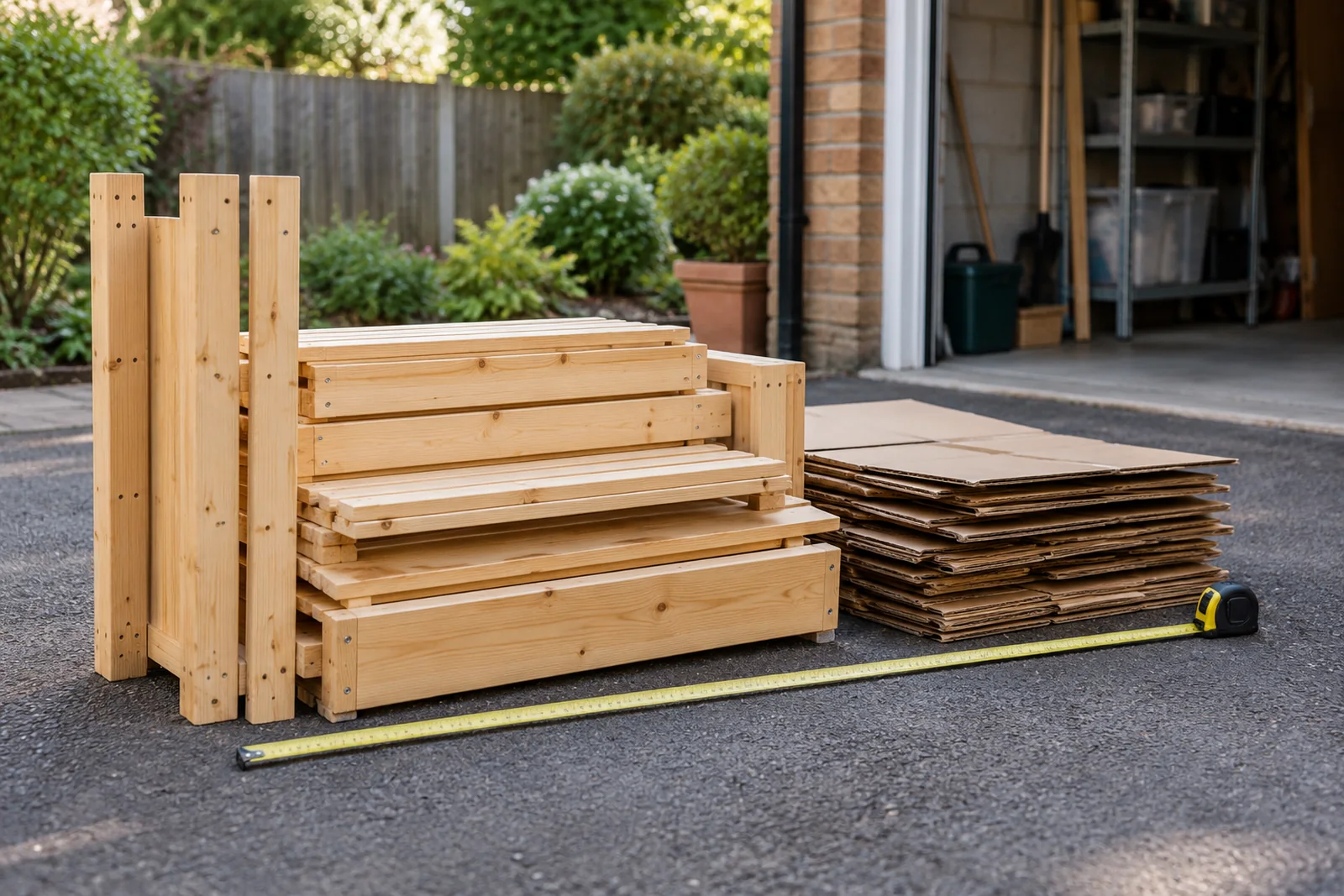
Once the keep and reuse items are separate, make a simple list of the remaining materials. For example, describe dismantled wooden shelves, clean cardboard boxes and a broken plastic storage unit as separate entries. Include anything unusually heavy, sharp or bulky. “A garage full” is much harder to quote for than a short list with rough amounts.

Measure the length, width and height of the main pile without climbing onto it or balancing items into a taller stack. If the rubbish is in several places, measure each group. Explain that these are rough measurements: a loose pile includes empty spaces, and different objects pack together differently. A photograph from each side can show bulky items that one front-on picture hides.
Skip capacity describes volume, not a guaranteed weight allowance. A small amount of dense material can affect the loading plan differently from lightweight cardboard. Use the skip size guide to understand the choices, then give the supplier your actual waste list. Do not choose solely from a bag-count estimate or assume every material is accepted in every skip.
Plan how the waste will reach the vehicle
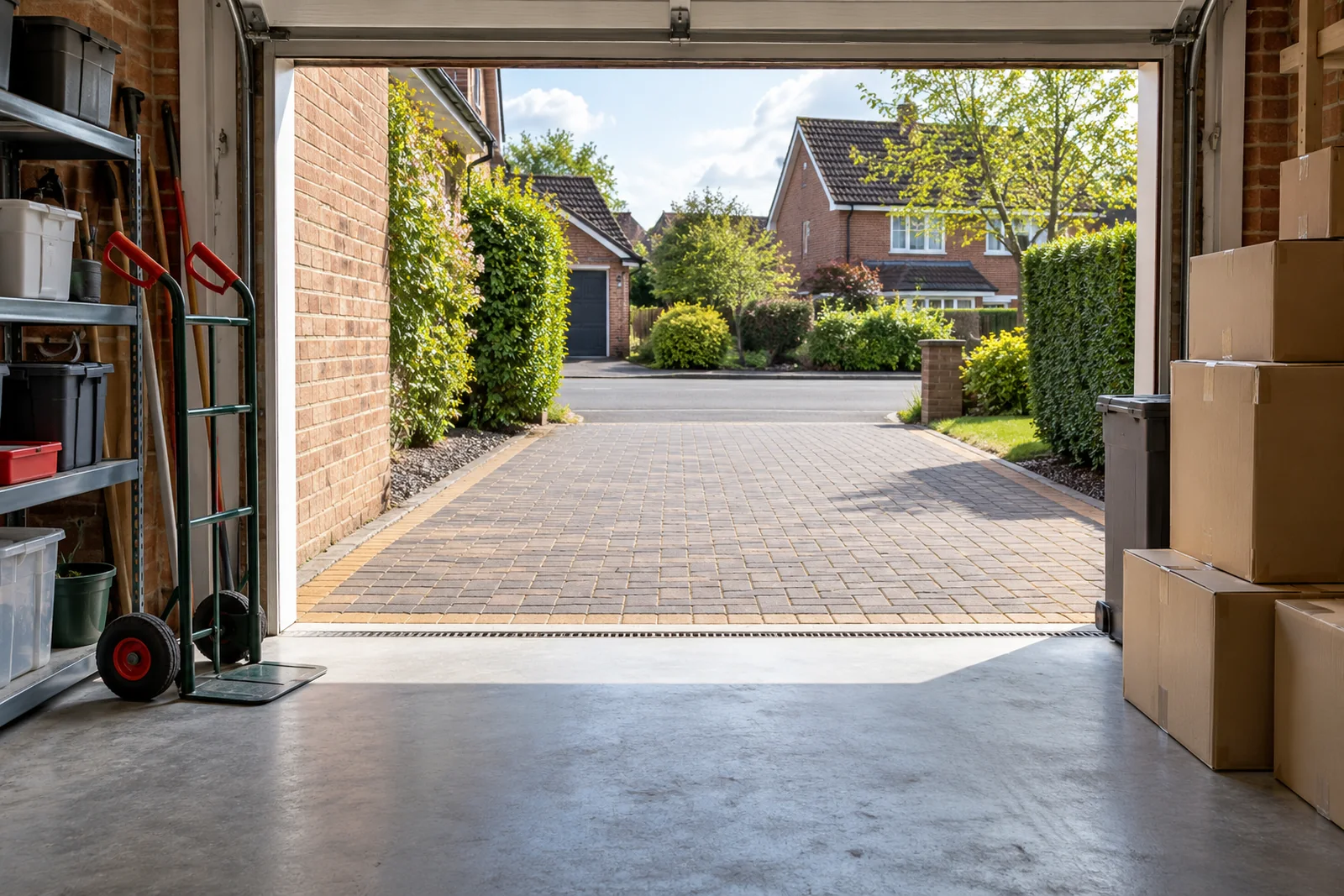
Walk the route from the garage to the proposed skip or collection point. Notice the narrowest doorway, gate, steps, corners and any parked car that reduces the space. Move ordinary loose clutter out of the walkway before the clearout starts. Leave enough room to use the route comfortably rather than packing belongings tightly along both sides.
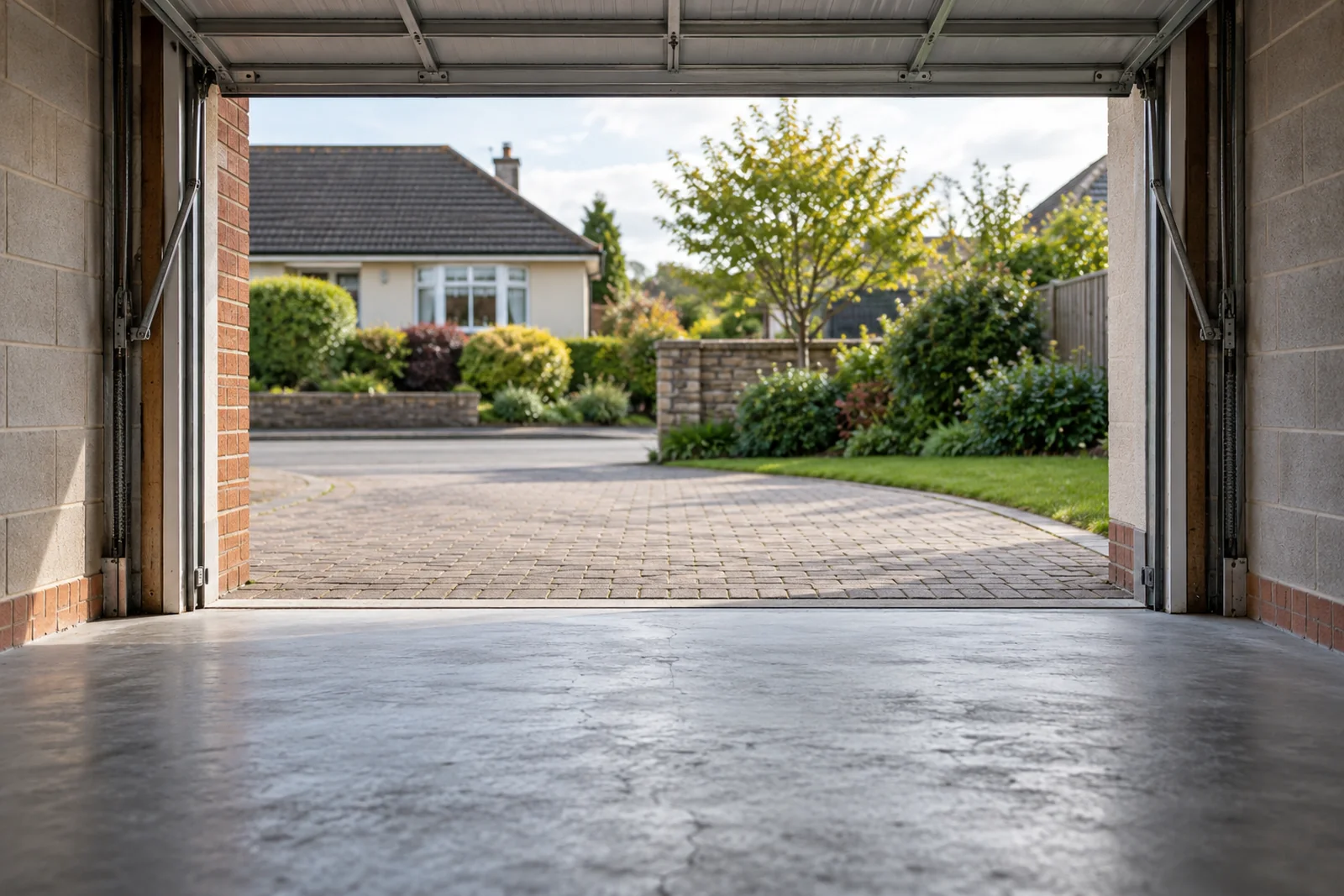
A skip suits a job where you can load the agreed waste yourself over the hire period. If moving the rubbish is the difficult part, rubbish removal with lifting and loading may be worth discussing. Describe where the items are now, not just where you hope to leave them. Steps, carrying distance and bulky items all help define the job and quote.
Do not attempt an awkward lift simply to have everything ready. Ask what help is included and which items can be handled before moving heavy objects. Keep children and pets away from the working area. If the route crosses a shared driveway or another person's land, agree access with the relevant person before the collection is arranged.
Make one useful call with the details ready
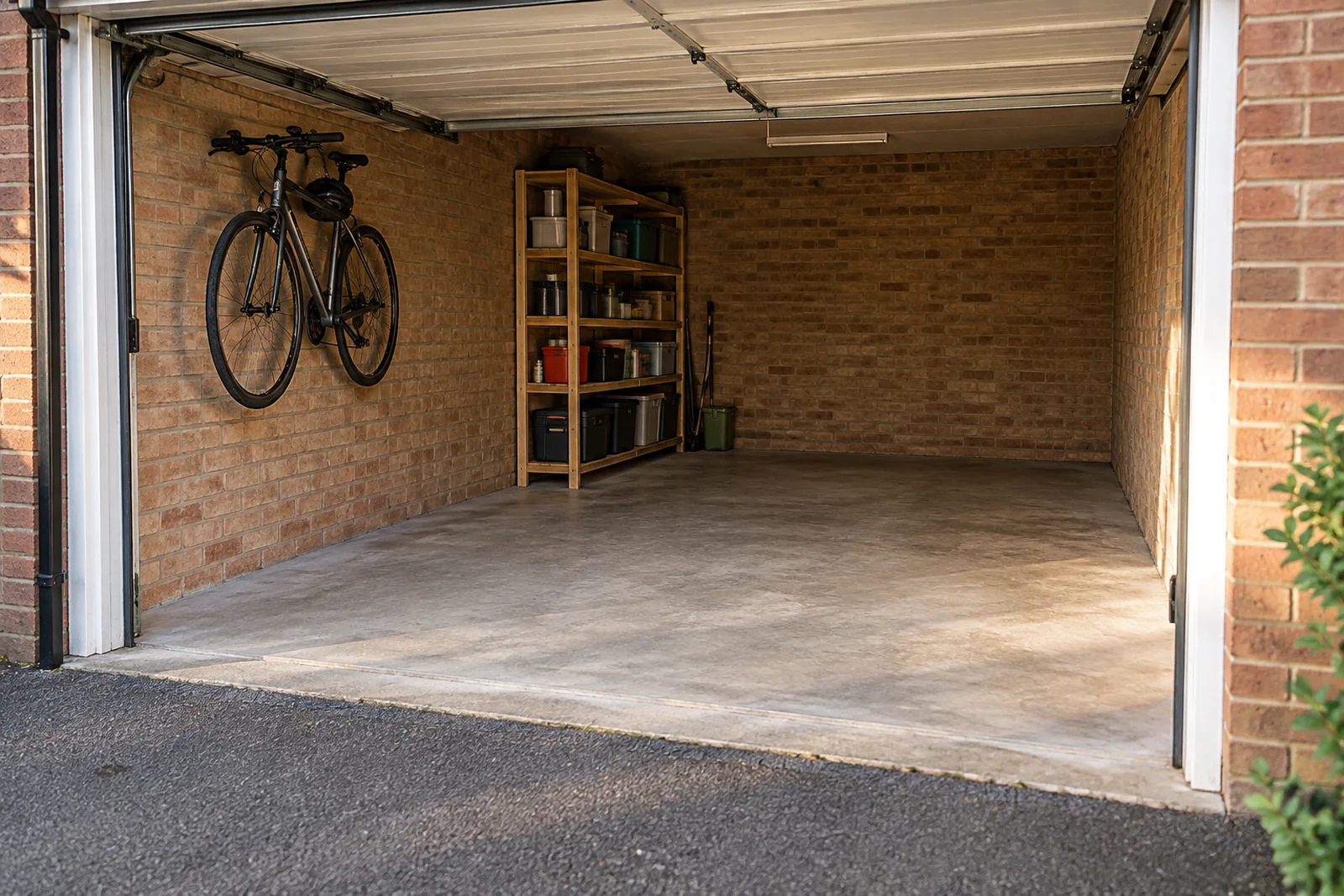
Have your postcode, waste list, rough measurements and access notes beside you when you call. Explain whether you want to load a skip over several days or need help taking the rubbish away. Mention the unusual items even if you expect to arrange a separate route for them; that prevents them being overlooked when the job is agreed.

Confirm what the quote covers, which materials can be taken and what must stay out. For skip hire, agree the proposed position, delivery arrangements, hire period and how to request collection. Ask about any weight limits, additional charges and whether the quoted total includes VAT where applicable. Do not treat an initial conversation as a confirmed booking until the details have been agreed.
Our first skip delivery checklist covers the next stage once a skip has been arranged. Keep the garage's saved belongings separate until everything is finished. An empty-looking corner is not an invitation to add new waste that was never included in the original quote.
A good garage clearout starts with decisions, then a clear route and an honest description of the waste. Sorting first can save you from booking around belongings that were never meant to be thrown away.
For skip hire in Cumbernauld, have your postcode and waste details ready. To talk through the collection you need, Call now on 01236 809239. Agree what can be taken, access, dates and the full quote before the job is booked.
See our Rubbish Removal in Cumbernauld for the relevant service.